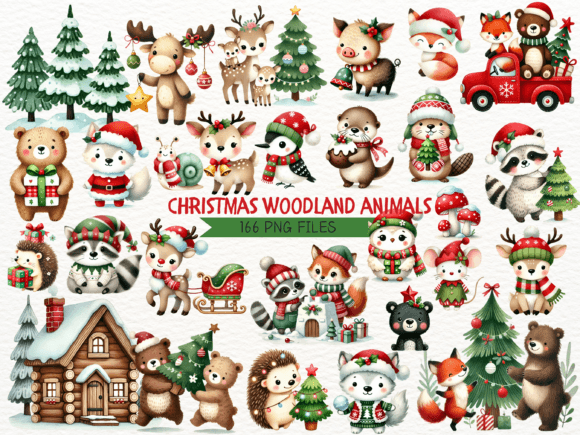
Woodland Christmas Watercolor Clipart: A Designer's Stitch Test
When I first opened the folder for Woodland Christmas Watercolor Clipart, my immediate reaction wasn't about stitch counts or file formats. It was about the mood. There is a specific, cozy warmth that this illustration carries, distinct from the rigid, geometric patterns often found in standard holiday collections. As someone who spends hours evaluating design assets for real-world embroidery projects, I look for that intangible quality that tells me whether a design will translate well from a screen to fabric. This collection feels less like a generic clipart set and more like a curated series of watercolor sketches meant to evoke the quiet magic of a winter forest.
The visual personality here is soft yet structured. The watercolor style introduces organic edges and subtle color bleeding that, while beautiful on paper, present a unique challenge when converted into a digital embroidery file. My initial assessment suggests that this design belongs best in projects where texture and atmosphere are prioritized over sharp, graphic lines. It feels perfectly at home on a heavy cotton canvas tote bag or a plush baby onesie, where the softness of the watercolor aesthetic can be mirrored by the tactile nature of the thread.
From Screen to Stitch: Real-World Application
I recently decided to test how Woodland Christmas Watercolor Clipart would perform in a practical scenario: creating a custom embroidered patch for a boutique holiday gift line. The goal was to produce a limited run of aprons for a local artisan market. The design needed to communicate "handmade" and "festive" without looking mass-produced. When I laid out the mockup, the woodland theme offered a sophisticated alternative to the typical red-and-green Santa motifs that clutter many craft fairs.
The way the design handles negative space is crucial here. In a machine embroidery design, the amount of open area determines how much the fabric shows through, which adds depth. For this project, the watercolor elements allowed for a mix of satin stitch for the defined outlines and fill stitch for the softer, colored areas. However, the transition between colors required careful planning. If you are an Etsy seller or running a small shop product line, you know that consistency is key to building trust with customers. This design offers a cohesive look that elevates the perceived value of the finished item.
Imagine applying this to a sweatshirt embroidery project. The soft, painterly strokes blend beautifully with the textured loops of fleece or French terry, creating a garment that looks expensive and thoughtfully designed. It works equally well as a tote bag design, where the rustic charm complements the sturdy material. For those selling digital product previews or printable mockups, this imagery provides a high-quality backdrop that makes your digital listings stand out immediately.
Navigating Technical Challenges
While the aesthetic appeal is undeniable, using Woodland Christmas Watercolor Clipart requires a designer's eye for detail. The watercolor effect relies on gradients and soft edges that do not always translate cleanly into stitch density. On a small hoop size, these delicate transitions can become muddy if the digitization is too dense. I advise testing the design on scrap fabric before committing to a final piece. This is especially important when working with textured fabrics or thin fabric, where the underlying structure might distort the fine details of the artwork.
There are specific scenarios where caution is necessary. If you are attempting to use this design on dark fabric, you must ensure there is sufficient underlay and potentially a backing layer to prevent the dark base from showing through the lighter watercolor tones. Similarly, on stretchy fabric like jersey, the stability of the design becomes paramount. Without proper stabilizer usage, the soft curves of the woodland theme might pucker, ruining the intended fluid look. Curved surfaces like caps also demand extra attention; the distortion inherent in stitching onto a curved brim can flatten the artistic intent of the original illustration.
Another critical consideration is the level of detail. While the watercolor style is forgiving, tiny lettering or intricate corners within the illustrations can get lost during the stitching process. If your project involves embroidered patches that need to withstand frequent washing, avoid placing critical details in areas that will experience the most friction. The durability of the finished product depends on balancing artistic flair with structural integrity.
Impact on Brand and Customer Perception
In the world of craft business and commercial embroidery, the choice of design asset speaks volumes about your brand identity. Using a generic, blocky design can make a handmade item feel cheap, whereas Woodland Christmas Watercolor Clipart signals a higher level of care and creativity. Customers are increasingly drawn to items that tell a story, and the woodland theme naturally evokes feelings of nature, tradition, and warmth.
This design enhances brand consistency across various products. Whether it appears on a kitchen towel, a pillow cover, or a wedding gift favor, the visual language remains unified. This consistency helps in building recognition among buyers. When a customer sees your work on a nursery decor item and then later spots the same style on a holiday gift, they begin to associate that specific aesthetic with your shop. It fosters a sense of professionalism that is essential for growing a creative entrepreneur's portfolio.
Furthermore, the versatility of this asset allows for personalization. You can adapt the color palette to match client requests while maintaining the core design assets of the woodland scene. This flexibility is invaluable for personalized gifts where uniqueness is the primary selling point. The ability to create a custom apparel item that feels bespoke rather than off-the-shelf is what drives repeat business in the handmade sector.
Essential Notes for the Practical Designer
Before integrating Woodland Christmas Watercolor Clipart into your next production run, there are several technical steps every designer should take. First and foremost, verify the licensing terms. Just because a file is available does not automatically grant permission for commercial embroidery or resale of digital embroidery files. Always confirm whether you are allowed to sell finished items made from the design.
Next, review the stitch density. High-density fill stitches can make the fabric stiff and uncomfortable, particularly on baby embroidery projects where softness is non-negotiable. Check the thread color contrast against your chosen fabric. Watercolor designs often rely on subtle shifts in hue; if the thread colors clash with the background, the illusion of the painting will be lost. Testing in black and white mockups can help you see if the composition holds up even without color, ensuring the shape and form are strong enough to stand on their own.
Finally, inspect the small details closely. Are the edges clean? Do the corners hold their shape? If the design includes any text, ensure it is legible after stitching. Remember that no matter how beautiful the source image is, the embroidery file is only as good as its execution. By taking the time to test on scrap fabric and adjusting the parameters accordingly, you ensure that your handmade product meets the high standards your customers expect.
In conclusion, Woodland Christmas Watercolor Clipart is a versatile and charming addition to any designer's toolkit. It bridges the gap between digital art and tactile craft with grace. Whether you are preparing for a busy holiday season or expanding your small shop product offerings, this design offers the potential to create meaningful, high-quality items that resonate with buyers. With careful planning and a keen eye for technical execution, it can elevate your work from simple stitching to true artistry.